 Denis Serden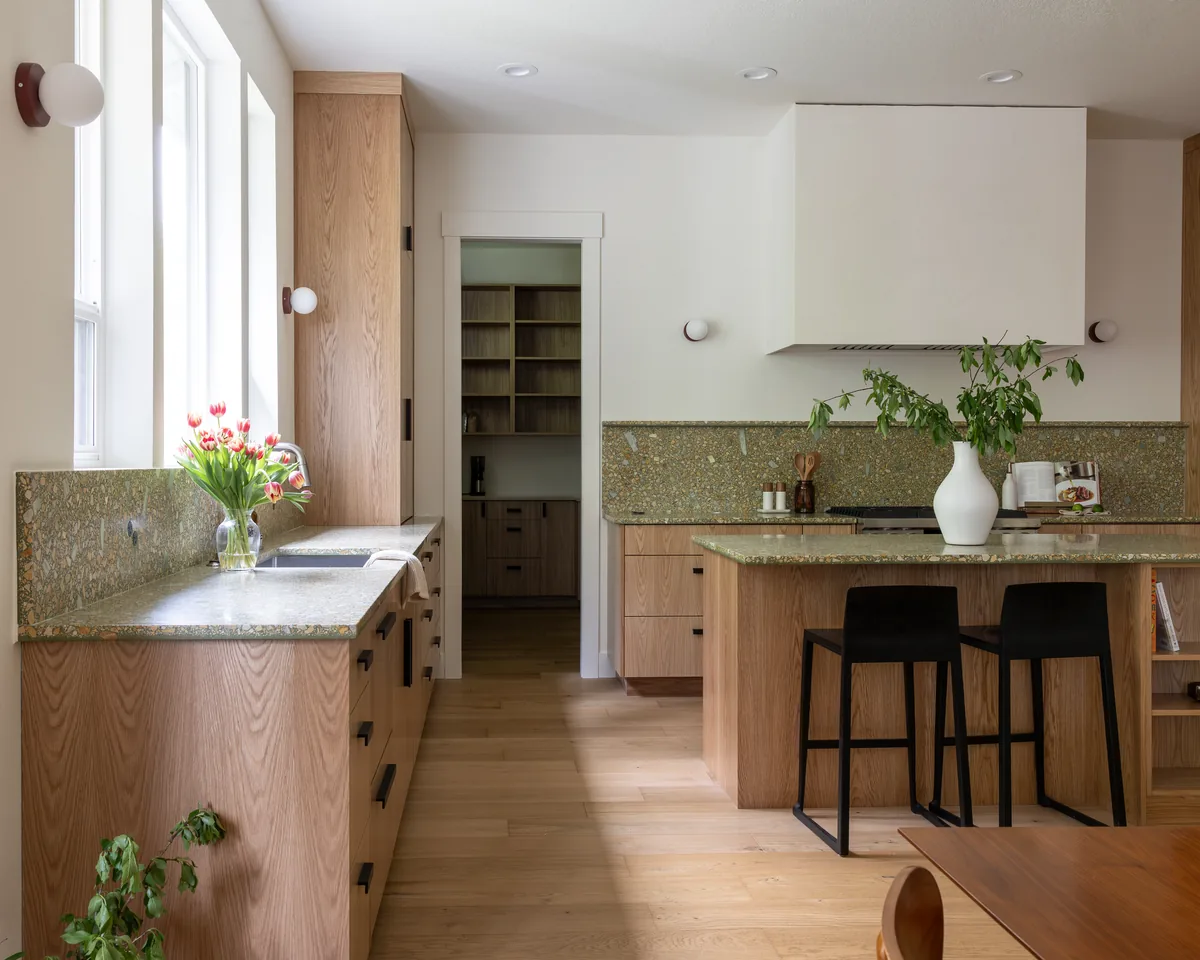
A $100,000 renovation budget puts you in serious territory in Clark County — enough to transform a kitchen and bathroom, refresh an entire full-home interior, or add a primary suite that adds lasting value to a $549,000 median-priced home. But $100k doesn't go the same distance on every project, and the wrong scope decision can leave you with a half-finished remodel and an empty account.
This guide breaks down exactly what that budget buys across four realistic scenarios, what drives costs up or down in the Vancouver–Portland metro, and how to prioritize when you're working with a fixed number.
What $100,000 Actually Means in the Vancouver, WA Market
Clark County sits in a construction cost band that runs roughly 10–15% above national averages, driven by labor demand from the Portland metro, PNW material premiums, and permit requirements that vary by municipality. Vancouver, Camas, Battle Ground, and Ridgefield each have their own permit timelines and fee structures, which affects your effective budget before a single nail goes in. That's true whether you're planning a bathroom remodel or a broader interior renovation.
The other factor unique to this region: moisture. The Vancouver area averages 42 inches of rain per year, with humidity running 75–85% from October through April. That means material selection isn't just aesthetic — it's structural. Skimping on moisture-resistant substrates, proper vapor barriers, or exterior-grade finishes in a PNW bathroom remodel creates problems that cost far more to fix later than they would have cost to prevent upfront.
With those baselines in mind, here's what $100,000 realistically buys across four common project types. If a single high-impact room is your priority, our kitchen remodel cost guide goes deeper on that scope, and a free consultation is the fastest way to pressure-test your own numbers.
Scenario 1: Full Kitchen + Primary Bathroom Combo
This is the most popular use of a $100k budget among Clark County homeowners, and for good reason. Kitchens and bathrooms deliver the strongest return on investment of any remodeling category. The 2025 Cost vs. Value Report puts a minor kitchen remodel at 112.9% ROI nationally, and mid-range bathroom remodels return roughly 80%.
A realistic kitchen + bathroom split at this budget looks like this:
| Room | Scope | Estimated Cost |
|---|---|---|
| Kitchen | New cabinets, quartz countertops, tile backsplash, appliances, lighting, flooring | $55,000 – $65,000 |
| Primary Bathroom | Full gut, new tile shower, vanity, fixtures, exhaust fan, heated floor | $28,000 – $38,000 |
| Permits + Contingency | Clark County permits, 10% contingency buffer | $7,000 – $10,000 |
| Total | $90,000 – $113,000 |
At the lower end of that kitchen range, you're working with semi-custom cabinets, mid-grade quartz, and standard appliances. At the upper end, you're getting full-custom cabinetry, premium stone, and a professional-grade range. The bathroom scope stays consistent either way — a full gut-and-rebuild with moisture-resistant cement board, a tiled walk-in shower, and quality fixtures.
What you give up at this budget: A $100k kitchen-bath combo doesn't include a full layout reconfiguration. Moving load-bearing walls, relocating plumbing stacks, or adding square footage pushes costs significantly higher. If your kitchen layout works but the finishes are dated, this budget is well-matched. If you need to knock out a wall to open the floor plan, plan for $120k–$140k minimum.
Scenario 2: Whole-Home Cosmetic Refresh
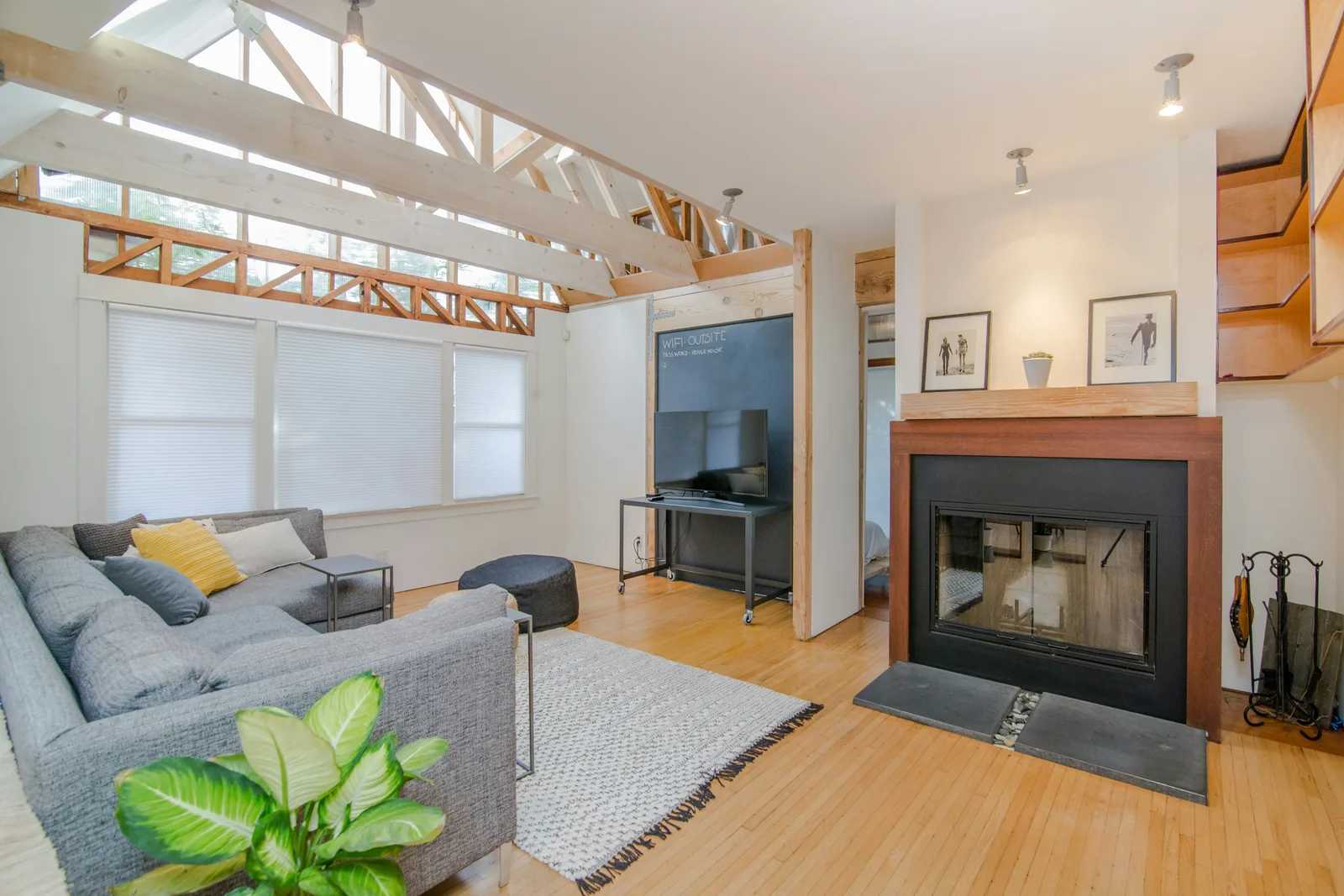
If your home's bones are solid but every room feels stuck in 2005, a whole-home cosmetic refresh is a high-impact use of $100k. This approach touches every room without gutting any of them — new flooring throughout, interior paint, updated lighting, trim work, and targeted fixture replacements in kitchens and baths.
A typical 1,800–2,200 sq ft Vancouver home at this scope:
| Category | Scope | Estimated Cost |
|---|---|---|
| Flooring | LVP or hardwood throughout, tile in wet areas | $18,000 – $28,000 |
| Interior Paint | Walls, ceilings, trim, doors | $8,000 – $14,000 |
| Kitchen Updates | New cabinet fronts, countertops, hardware, sink, faucet | $18,000 – $25,000 |
| Bathroom Updates (2) | New vanities, toilets, fixtures, mirrors, lighting | $12,000 – $20,000 |
| Lighting + Electrical | New fixtures throughout, dimmer switches | $8,000 – $14,000 |
| Trim + Doors | Interior door replacement, new casing and baseboards | $6,000 – $12,000 |
| Contingency | 10% buffer | $7,000 – $11,000 |
| Total | $77,000 – $124,000 |
The wide range reflects home size and finish level. A 1,600 sq ft ranch with two bathrooms lands closer to $80k. A 2,400 sq ft two-story with three bathrooms and a larger kitchen pushes toward $115k–$120k.
What you give up: A cosmetic refresh doesn't replace plumbing, update electrical panels, or address structural issues. If your home has deferred maintenance — aging water heater, outdated panel, failing windows — those items compete directly with finish work for budget. Address mechanical systems first; cosmetics second.
Scenario 3: Primary Suite Addition or Conversion
Adding a primary suite — either by converting existing space like a bonus room or large bedroom, or by building a modest addition — is achievable at $100k depending on scope and whether new square footage is involved.
Conversion (existing space): Converting a 400–500 sq ft bonus room into a primary suite with a walk-in closet and full bathroom runs $65,000–$95,000 in the Vancouver market. This is the most budget-friendly path to a true primary suite.
Addition (new square footage): A ground-floor addition of 300–400 sq ft with a bedroom and bathroom starts at $120,000–$180,000 once you factor in foundation work, framing, roofline tie-in, and exterior finishes. This scope exceeds a $100k budget in most cases.
If a primary suite is your goal and your budget is firm at $100k, focus on conversion first. A well-executed conversion with a spa-quality bathroom and custom closet system delivers the experience of a primary suite without the structural complexity of an addition.
PNW Material Considerations for Suite Additions
Any bathroom added in a Clark County home needs moisture-resistant construction throughout — not just in the shower. That means:
- Cement board or equivalent substrate behind all tile
- Exhaust fans rated for continuous operation (not just code minimum)
- Moisture-resistant drywall in the entire bathroom, not just wet zones
- Proper vapor barrier integration with exterior walls
These aren't upgrades — they're baseline requirements for a bathroom that holds up in a climate with eight months of elevated humidity.
Scenario 4: Phased Multi-Room Renovation
Some homeowners prefer to spread $100k across two or three phases rather than concentrating it in one area. A phased approach makes sense when you have multiple rooms that need work but no single room is in crisis.
A common three-phase structure:
Phase 1 — Kitchen ($45,000–$55,000)
Full kitchen remodel with new cabinets, countertops, appliances, and flooring. This phase delivers the highest daily-use impact and strongest ROI.
Phase 2 — Primary Bathroom ($28,000–$35,000)
Full gut and rebuild of the primary bath with tiled shower, new vanity, and updated fixtures.
Phase 3 — Common Areas ($15,000–$22,000)
New flooring in living and dining areas, interior paint, updated lighting.
The advantage of phasing is that you can live in the home between projects, adjust scope based on what you learned in Phase 1, and spread financial impact over 12–24 months. The trade-off is that phased projects typically cost 8–12% more in total than completing the same scope at once, because mobilization, permits, and project management costs repeat with each phase.
What Drives Costs Up (and Down) in Clark County
Understanding the cost levers specific to the Vancouver–Portland metro helps you make smarter scope decisions before you commit to a budget.
Factors That Increase Project Cost
- Permit complexity: Structural changes, electrical panel upgrades, and plumbing relocations all require separate permits and inspections in Clark County. Budget $1,500–$4,000 for permits on a mid-size remodel.
- Asbestos and lead: Homes built before 1980 may require abatement before demolition. Testing runs $300–$600; abatement varies widely based on scope.
- Custom or imported materials: Lead times on custom cabinetry run 8–14 weeks in the current market. Delays extend project timelines and can affect labor scheduling costs.
- Slope and access: Homes on sloped lots in areas like Felida or the Heights face higher labor costs for exterior work due to access challenges.
Factors That Reduce Project Cost
- Keeping plumbing in place: Remodeling without moving drain lines or supply lines saves $3,000–$8,000 per room.
- Reusing cabinet boxes: Refacing existing cabinet boxes rather than full replacement cuts kitchen cabinet costs by 30–40% when the boxes are structurally sound.
- Flexible scheduling: Contractors can sometimes offer better pricing for projects scheduled during slower winter months (November–February in the PNW).
- Bundling scope: Completing multiple rooms in one project reduces mobilization costs and often qualifies for volume pricing on materials.
How to Prioritize Scope on a Fixed $100k Budget
When every room needs work and the budget has a ceiling, prioritization comes down to three questions:
- What has the highest daily impact on how you live in the home? Kitchens and primary bathrooms win this category consistently. You use them every day.
- What has the strongest return if you sell in the next 5–7 years? Kitchen remodels, bathroom updates, and exterior improvements (siding, windows) consistently outperform interior cosmetic work on resale.
- What deferred maintenance will cost more if you wait? Failing windows, moisture intrusion, or an aging roof should take priority over aesthetic upgrades. A beautiful kitchen in a house with water damage is a liability, not an asset.
Once you've answered those three questions, build your scope from the top down — highest priority first — until you hit your budget ceiling. Resist the temptation to add scope incrementally once a project is underway. Mid-project additions are the single most common cause of budget overruns.
How Serden Group Approaches $100k Projects
Serden Group has completed 1,500+ remodeling projects across the Vancouver–Portland metro over 20+ years, and $100k projects represent a significant portion of that work. A few things that distinguish how they handle this budget range:
Dedicated crew, start to finish. Unlike contractors who juggle multiple crews across multiple sites, Serden assigns a dedicated team to your project. That means consistent quality, faster problem-solving when issues arise, and a single point of accountability throughout the build.
100% full warranty on all work. Every project Serden completes carries a full warranty — not a limited warranty with carve-outs, but coverage on all work performed. For a $100k investment, that matters.
Financing options. Serden offers flexible financing including monthly payment plans, which allows some homeowners to increase scope slightly without straining cash flow. They're currently offering up to $2,500 in savings on projects over $10,000.
Living in-home during construction. Serden's process is designed to accommodate homeowners who stay in the home during the remodel — a practical reality for most families. Project sequencing accounts for livability, not just construction efficiency.
Serden holds a Washington L&I General Contractor license (#SERDEGL826PD), Oregon CCB #239429, BBB A+ accreditation, and memberships in NARI Pacific Northwest, NAHB, and NKBA. Their 5.0 Google rating and 290+ reviews across Google and Angi reflects a 99% client satisfaction rate — numbers that hold up because they're built on repeat referrals in a market where reputation travels fast.
Frequently Asked Questions
Is $100,000 enough for a whole home remodel in Vancouver, WA?
It depends on what "whole home" means. A cosmetic refresh of an 1,800–2,000 sq ft home — new flooring, paint, updated fixtures, and kitchen and bath surface updates — is achievable at $100k. A full gut renovation with structural changes, new plumbing, and electrical upgrades on the same home would run $250,000–$400,000 or more. Most homeowners at this budget get the best results by concentrating scope in two or three high-impact rooms rather than spreading thin across the entire house.
How long does a $100k remodel take in Clark County?
A kitchen and bathroom combo typically runs 8–14 weeks from permit approval to completion. A whole-home cosmetic refresh on a larger home can take 12–18 weeks. Permit timelines in Clark County currently average 3–6 weeks for residential remodeling permits, so factor that into your overall project timeline before construction begins.
What permits are required for a $100k remodel in Vancouver, WA?
Permit requirements depend on scope. Cosmetic work — paint, flooring, fixture swaps — generally doesn't require permits. Structural changes, electrical panel work, plumbing relocations, and additions all require permits from Clark County or the City of Vancouver, depending on your address. A licensed contractor handles permit applications as part of the project, but the fees come out of your budget. Budget $1,500–$4,000 for permits on a mid-size remodel.
Should I remodel before or after selling my home in Vancouver?
If you're selling within 12 months, focus on high-ROI projects: kitchen updates, bathroom refreshes, and exterior improvements. A minor kitchen remodel returns 112.9% in the 2025 Cost vs. Value Report. Avoid over-improving for your neighborhood — if comparable homes in your area sell at $550k, a $150k kitchen renovation won't return dollar-for-dollar. If you're staying 5+ years, prioritize what improves your daily life first, resale value second.
Can I live in my home during a $100k remodel?
Yes, in most cases. Kitchen remodels are the most disruptive — plan for 4–8 weeks without a functional kitchen. Bathroom remodels are manageable if you have a second bathroom available. Serden Group specifically designs their project sequencing to accommodate homeowners living in the home during construction, which is the norm rather than the exception for this budget range.
What's the biggest mistake homeowners make with a $100k renovation budget?
Spreading the budget too thin. Trying to touch every room with $100k usually means no room gets done properly. The second most common mistake is skipping the contingency buffer. In a PNW climate where opening walls sometimes reveals moisture damage or outdated wiring, a 10% contingency isn't optional — it's insurance. Build it in before you finalize scope, not after.
Does Serden Group offer financing for $100k projects?
Yes. Serden offers flexible financing options including monthly payment plans, which can help homeowners manage cash flow on larger projects. They're currently offering up to $2,500 in savings on projects over $10,000. Contact them directly at (360) 836-7775 to discuss financing options alongside your project scope.
A $100,000 renovation is a significant decision, and the right scope depends on your home's specific conditions, your neighborhood's comparable values, and what matters most to how you live day to day. There's no universal right answer — but there is a right answer for your house. Serden Group offers free consultations for Clark County homeowners at any stage of the planning process. Whether you have a detailed scope in mind or just a budget and a list of frustrations, their team can help you figure out where $100k goes furthest in your specific home.
Call (360) 836-7775 or request your free consultation online. No pressure, no obligation — just straight answers from a contractor who's been doing this in Vancouver for over 20 years.